TCP/IP
Course description: this is a classical introductory
course on TCP/IP. It covers basic principles of the internetworking,
special features of the TCP/IP stack, methods of addressing and routing,
including where masks are used. The course studies all main protocols
of the transport infrastructure of the IP network (such as TCP, UDP,
IP, ICMP, ARP) and application layer protocols that are directly connected
to the transport system (DHCP and DNS). A significant part of the course
is dedicated to routing protocols RIP, OSPF, BGP.
Course(s) to be taken before this course:
Introduction to Networking.
When this course
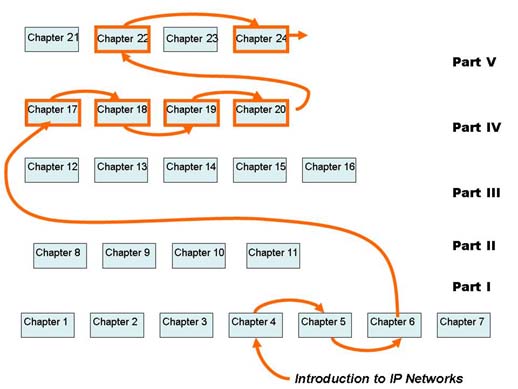
precedes the Introduction to IP networks course, it is recommended to
make an emphasis on those topics that relate to the TCP/IP stack, which
corresponds to the following sections of the book: Internet Standardisation
in Chapter 4 Network Architecture and Standardization, Internet in Chapter
5 Examples of Networks, Repeated Transmission and Sliding Window in
Chapter 6 Network Characteristics.
Chapters of the book on which this course
can be based: the main material can be found in Chapters
17 – 20. Also, the following chapters are relevant to a various degree
to this course: Network management in IP networks and Application of
TCP/IP in WANs (Chapter 22) and IPSec Protocol (chapter 24, the Protected
Channel Service).
|
 |